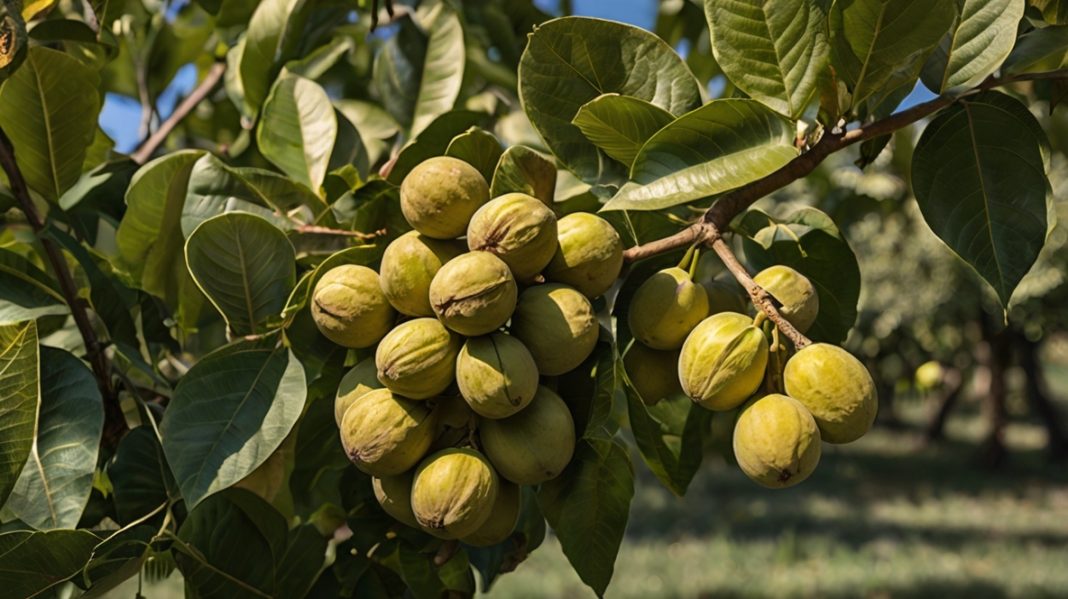

The walnut is a fruit tree from the nut family, which originates from Central Asia and the Balkans, but is now widespread throughout the world. In Ukraine, walnuts grow in orchards, on private plots and even along streets, as they adapt well to climatic conditions. The tree can live for over 300 years and bear fruit from 7–10 years of age.
Not only the kernels of the nuts are used for medicinal purposes, but also the partitions, shells, leaves and even roots. The most valuable part is the kernels of the fruit, as they contain high concentrations of vitamins, trace elements, proteins and fats.
Chemical composition of walnuts (per 100 g of dry kernels)
| Substance | Content |
|---|---|
| Calories | 654 kcal |
| Proteins | 15.2 g |
| Fats | 65.2 g |
| Carbohydrates | 13.7 g |
| Fibre | 6.7 g |
| Vitamin E | 2.6 mg |
| B vitamins (B1, B2, B6) | 0.5–0.8 mg |
| Folic acid | 98 mcg |
| Vitamin C | 1.3 mg |
| Potassium | 441 mg |
| Calcium | 98 mg |
| Magnesium | 158 mg |
| Phosphorus | 346 mg |
| Iron | 2.9 mg |
| Omega-3 fatty acids | 2.5 g |
| Omega-6 fatty acids | 38 g |
The healing properties of walnuts
Walnuts are a real source of energy and nutrients. They:
- strengthen the cardiovascular system;
- improve brain function, memory and concentration;
- normalise blood cholesterol levels;
- stimulate the immune system;
- promote recovery after physical and mental exertion;
- support the functioning of the gastrointestinal tract thanks to fibre.
Nuts are prescribed as an additional remedy for vitamin deficiency, anaemia, atherosclerosis, heart disease and nervous system disorders.
Walnut oil
The oil is obtained by cold pressing the kernels. It has a golden colour, pleasant aroma and mild taste. This product is a source of unsaturated fatty acids, vitamin E and antioxidants.
Properties: lowers cholesterol, improves blood vessel condition, stimulates cell regeneration, supports liver function, strengthens the immune system.
How to take: 1 teaspoon 1-2 times a day before meals or as a dressing for salads and dishes. In cosmetology, it is used to nourish and moisturise the skin, as well as for hair care.
Contraindications
Despite their usefulness, walnuts have a number of restrictions:
- nut allergy;
- obesity or low-calorie diets (due to high calorie content);
- gastrointestinal diseases in the acute stage (gastritis, ulcers);
- excessive consumption can cause headaches and skin rashes.
It is recommended to consume no more than 5–7 walnut kernels per day to reap the benefits without harming your health.