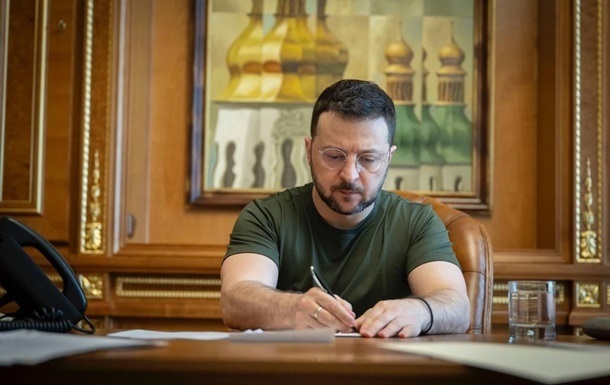

President of Ukraine Volodymyr Zelensky approved the decision of the National Security and Defense Council to expand sectoral sanctions against the financial institutions of the Russian Federation. The new restrictions are aimed at stopping Russia from using modern financial instruments to bypass sanctions, including cryptocurrency.
The initiative, first introduced in February 2023, covered all banks, non-bank credit organizations, payment system operators, stock market participants, and other similar institutions registered or located in Russia, for a period of 50 years. Now, based on proposals prepared by the National Bank of Ukraine, the restrictions have been extended to operators of platforms for the circulation of digital financial assets, cryptocurrency services, financial platforms, and clearing organizations.
Operations with virtual assets and the use of platforms, services, or products for conducting operations with financial and virtual assets are prohibited. Ukraine has also implemented a tougher approach by sanctioning all virtual assets backed by the Russian ruble, which is intended to complicate the use of cryptocurrencies for circumventing sanctions.
These innovations partially correspond to the methods applied in the European Union’s sanctions, but Ukraine has expanded the scope of the restrictions, indicating increasing coordination efforts at the international level to counteract Russia’s financial circumvention maneuvers.
Earlier, on July 7, Zelensky imposed sanctions against suppliers of equipment for Russian defense industry plants and against propagandists, which increases strategic pressure on the Kremlin in the context of its military capabilities.
| Category | Description |
|---|---|
| Financial institutions | Banks, non-bank organizations, payment system operators |
| Stock market | Participants, insurance companies, investment funds |
| Digital assets | Cryptocurrency services, financial platforms |
| Restrictions | Ban on all virtual assets backed by the ruble |