
The Court of Arbitration for Sport rejected the Ukrainian skeleton racer’s lawsuit against the IOC
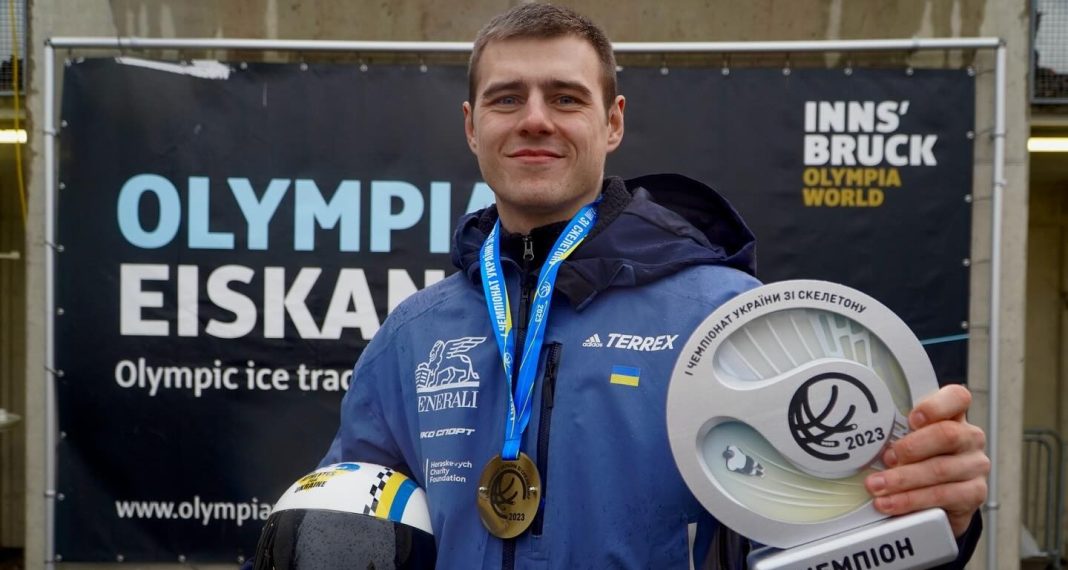
The Court of Arbitration for Sport (CAS) in Lausanne rejected the lawsuit of Ukrainian skeleton racer Vladyslav Heraskevych against the International Olympic Committee (IOC) and the International Bobsleigh and Skeleton Federation (IBSF). Heraskevych contested the disqualification decision at the XXV Winter Olympic Games due to his intention to use a “helmet of remembrance.”
According to CAS, the decision was made after a detailed review of arguments from both sides. The main reason for rejecting the lawsuit was the IOC’s actions being in accordance with its guidelines, which limit expressions during competitions on sports venues. CAS Secretary General Matthieu Reeb noted that while freedom of speech is a fundamental right of athletes, its implementation must comply with established rules.
Heraskevych was disqualified on February 12 before the first run in skeleton at the 2026 Olympics. He planned to compete wearing a helmet with images of athletes who had died as a result of the Russian invasion of Ukraine. The IOC considered this a violation of the Olympic Charter. The proposal to use a black armband instead of the helmet did not satisfy the Ukrainian athlete.
The arbitrator upheld the IOC’s decision to return Heraskevych’s accreditation but acknowledged the restrictions on expression during competitions as justified. Ukrainian President Volodymyr Zelensky expressed gratitude to Heraskevych for reminding the world of the cost of Ukraine’s struggle.
| Date | Event | Comments |
|---|---|---|
| February 9 | IOC’s ban on using the “helmet of remembrance” | IOC cited the Olympic Charter as the reason |
| February 10 | Emphasized the possibility of using a black armband | Alternative from the IOC |
| February 12 | Heraskevych disqualified | For intending to use the “helmet of remembrance” |
| February 17 | CAS rejected the lawsuit | IOC’s actions were recognized within the rules |