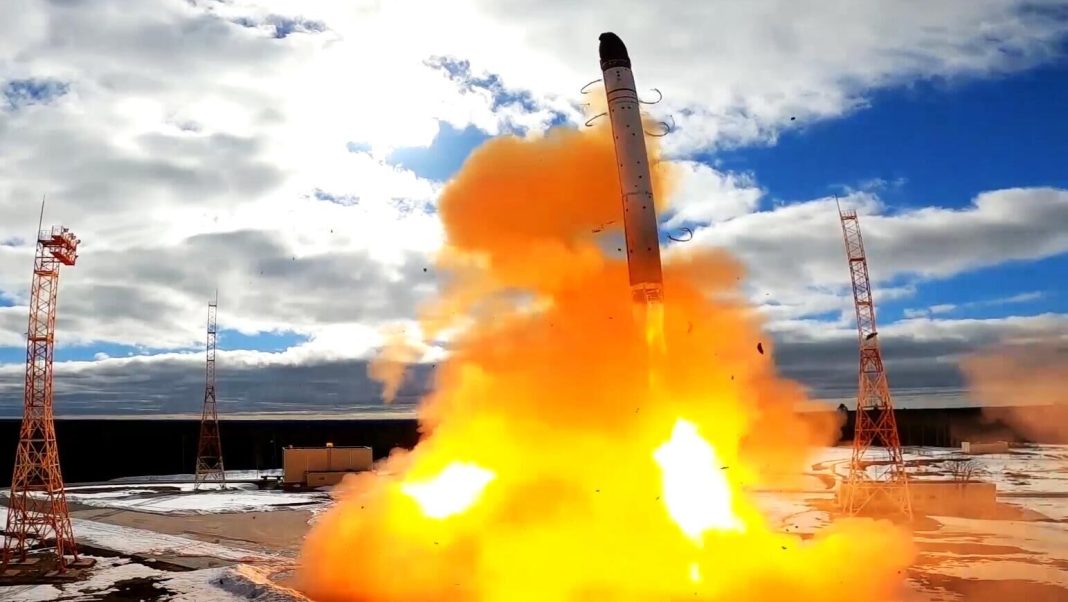

The explosion of the Russian missile “Sarmat” in Yasniy raised suspicions about the toxicity of the fuel.
Following the explosion of the likely intercontinental ballistic missile “Sarmat” in the Russian city of Yasniy, suspicions arose that toxic fuel was used. Analysts point to unusually colored emissions, which may signal the presence of dangerous chemicals.
According to sources, the “Sarmat” missile exploded almost immediately after launch, creating a lot of unusually colored smoke. Analysts from Defense Express indicate that this color may be characteristic of missiles using toxic fuel known as “amil” and “heptyl.” These components were often used in the fuel for Soviet-made rockets, such as “Proton.”
The event occurred at a base located near the Yasniy cosmodrome, which is part of the strategic region of the Russian Federation. This incident might be part of a larger picture of failures in the development and testing of the “Sarmat.” Testing problems could slow down the introduction of this missile into combat duty.
Open sources indicate that Russia has already encountered several accidents during launches, pointing to significant technical difficulties in implementing the “Sarmat” program. Frequent delays and technical malfunctions undermine Russia’s claims about its ability to swiftly modernize its strategic weaponry.