
Germany Respects Poland’s Decision to Refuse Extradition of Suspect in Nord Stream Sabotage
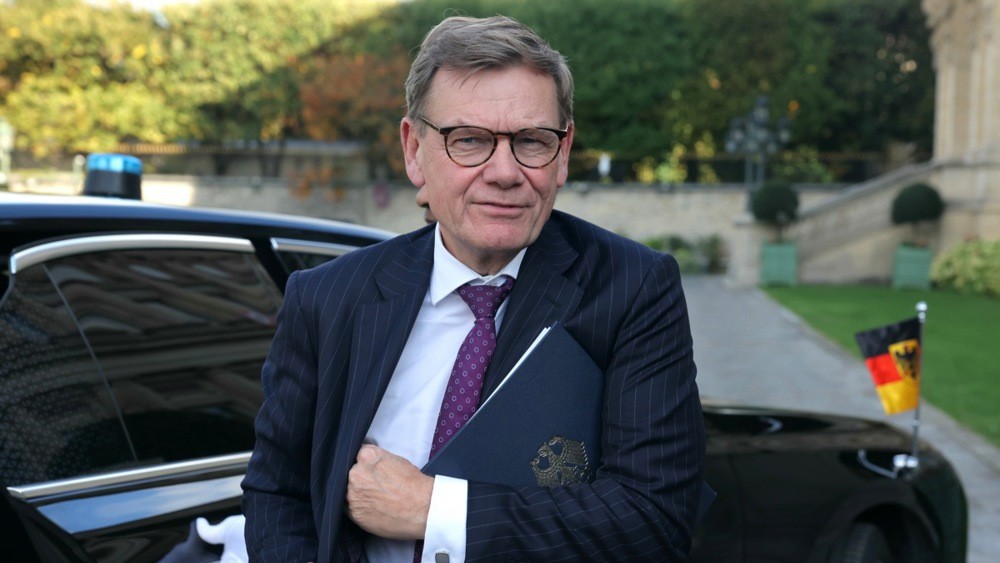
German Foreign Minister Johann Wadepful expressed respect for the decision of the Polish court, which refused to extradite to Germany a Ukrainian citizen suspected of involvement in the explosions of the Russian Nord Stream gas pipelines. Wadepful emphasized adherence to the principle of separation of powers.
The matter concerns Ukrainian Volodymyr Zhuravlov, whom Poland refused to extradite at Germany’s request, suspecting him of being involved in the sabotage of the Nord Streams. The Polish court’s decision also included the release of Zhuravlov from custody. Commenting on this case, Wadepful noted that the executive branch should not interfere in the affairs of the judiciary, especially in other states.
The Polish court’s decision came against the backdrop of protests against the construction of the Nord Streams, which are considered problematic by several politicians due to their geopolitical implications. Polish Prime Minister Donald Tusk emphasized that the issue lies precisely in the construction of these pipelines, rather than in acts of sabotage.
Another instance of Western countries’ reluctance to carry out extradition involves the decision of the Italian Supreme Court, which also refused to extradite to Germany Ukrainian Serhiy Kuznetsov—another suspect in the Nord Stream explosions. Investigations into these incidents are ongoing in several European countries, including Sweden, Denmark, and Germany itself.
The destruction of three out of four strands of Nord Stream 1 and Nord Stream 2 occurred in September 2022. At the time, they were not operational due to Russian military aggression but were filled with gas. The European Union immediately labeled these events as a suspicious sabotage and launched an investigation.