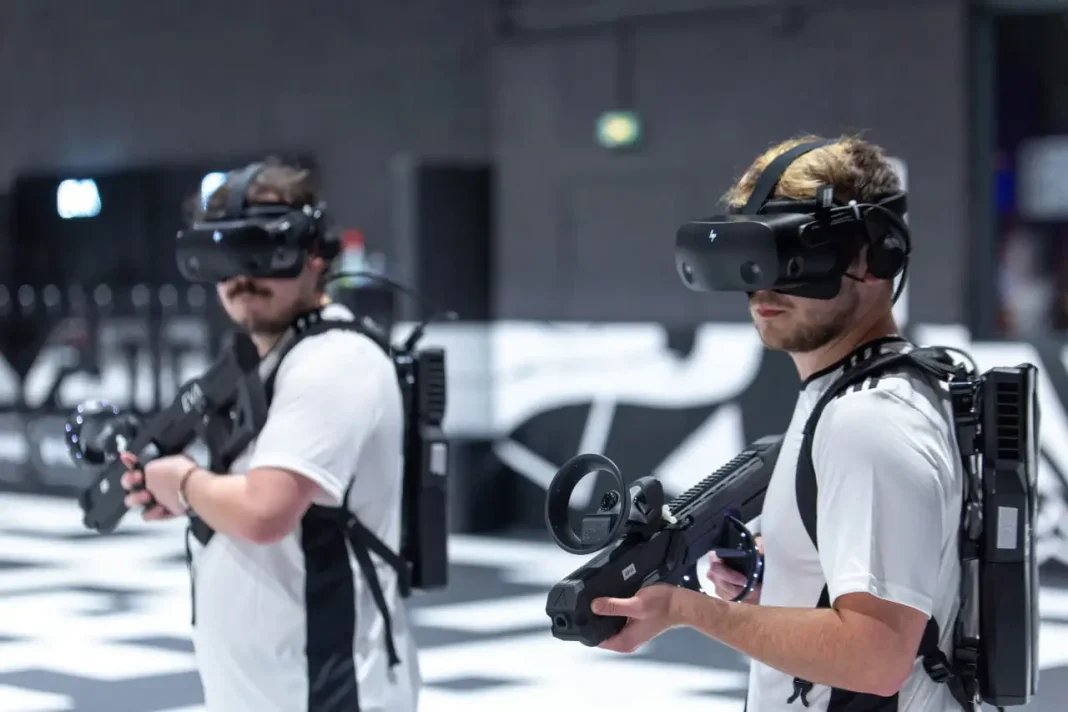

Ukrainian military actively implement VR in personnel training, significantly increasing safety and training efficiency. Global leaders have long invested in VR technologies for defense purposes, while Ukrainian companies are just beginning to actively explore this field.
In recent years, virtual reality (VR) technologies have transitioned from tools for entertainment and education to the realm of defense training. VR is now used in Ukraine for training drone operators, air defense units, and pilots, ensuring safety and reducing training costs. Globally, the demand for VR for military purposes is growing, as evidenced by the market size, estimated at over $1 billion in 2024 with a forecasted growth to $3.6 billion by 2032.
In Ukraine, due to the war, dozens of teams have emerged, creating their own VR solutions for the military and veterans, such as simulators for drone operation training or preparing to intercept missiles. Notable developers include companies like “Tekhnari”, Atmaraksi, and Aspichi. The demand for VR solutions is increasing thanks to their contribution to faster and safer military training, as well as veteran rehabilitation with the help of startups like Advin and Aspichi.
Despite active development, VR in the military sphere still faces limitations due to the physical discomfort caused by heavy helmets. Prolonged use of VR can cause fatigue and dizziness, so the military are considering alternatives such as panoramic screens, dome simulators, and tactile platforms that are gradually replacing traditional VR headsets in use.
In Western countries, investments in VR for defense are growing: in 2025, Meta announced a partnership with Anduril to develop VR devices for the US Army. In Ukraine, investments and hackathons are also conducted to develop VR solutions for similar purposes.
While VR technologies continue to expand training capabilities, the industry is seeking hybrid solutions that combine different technologies such as VR, AR, and panoramic displays. Successful integration of VR for military purposes requires accessibility and support from the state, as well as the ability to adapt these innovations to real-world conditions.
| Projected VR Market Assessment | 2019 | 2032 |
|---|---|---|
| North America | 44.73% of the global market | Growth to $3.6 billion |