
China Invests in Trans-Caspian Transport Route to Bypass Russia
China is actively developing the Trans-Caspian International Transport Route to reduce its dependence on traditional logistics routes through Russia and Belarus. This is happening against the backdrop of escalating geopolitical tensions globally.
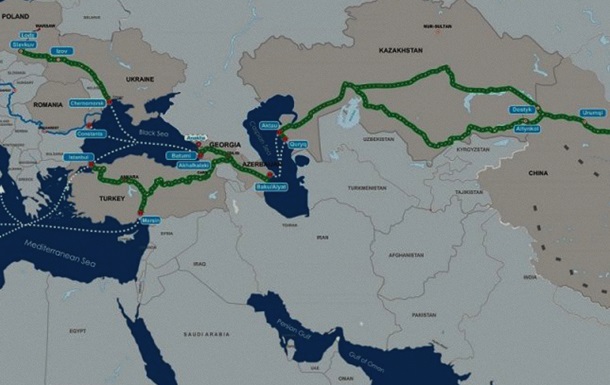
According to Ukraine’s Foreign Intelligence Service, the Trans-Caspian route passes through Kazakhstan, the Caspian Sea, Azerbaijan, Georgia, and Turkey, combining rail and road transport with sea crossings. The route is approximately 4,750 km long, and freight delivery takes 15-18 days, which is three times faster than traditional sea transport between China and Europe.
Chinese state-owned companies have already invested hundreds of millions of dollars in developing this corridor. Beijing has provided about $70 million in grant assistance and equipment for the Port of Baku, including a $2 million valuation. Additionally, Chinese corporations participated in constructing a new port in the Kazakh city of Aktau, costing $300 million.
Although the corridor’s capacity remains limited, China has opportunities for its further development. Ankara and Beijing signed a memorandum to integrate the route with the “One Belt, One Road” initiative in 2015. In early June, the Baku-Tbilisi-Kars railway, a key part of the route, began operating at full capacity.
Currently, the new transport corridor is gaining strategic significance, allowing trade transactions to bypass Russia. This could significantly impact regional economies and international logistics routes, particularly in light of ongoing sanctions against Russia.
| Country or Region | Investment | Project or Object |
| China | $70 million | Grant assistance for the Port of Baku |
| China | $300 million | Port in the city of Aktau, Kazakhstan |