
The increase in aggression in the Black and Azov Seas has led to significant losses in war risk reinsurance in Russia, which reached 2800% within four months. This forced the Russian insurance market to significantly raise tariffs.
Russian vessels are increasingly facing reinsurance refusals, especially after Ukraine intensified its attacks. Dmitry Grushin, head of cargo insurance at broker Remind, noted that Russian aggression in the Black and Azov Seas has significantly complicated the situation. Specifically, on July 13, the Ukrainian military reported the targeting of 105 Russian vessels heading to the temporarily occupied Crimea.
Insurance companies responded to the increase in losses by raising tariffs by 2-4 times. However, even these increases proved insufficient to cover the losses, as market participants point out. In light of these difficulties, the Russian government began exploring new mechanisms to cover attack-related losses. Russian agencies propose extending the military risk insurance system with state support, which operates in the occupied territories of Ukraine, to maritime vessels.
However, the Russian Ministry of Finance opposes this approach due to limited financial capabilities. The ministry suggests creating a mutual insurance society for shipowners and cargo owners, as well as a compensation fund to be financed by insurers and market participants. Experts do not support this idea, noting the difficulty of forming sufficient capital solely from shipowners. Meanwhile, the system with state support appears more attractive as it is quicker to launch and more stable for business.
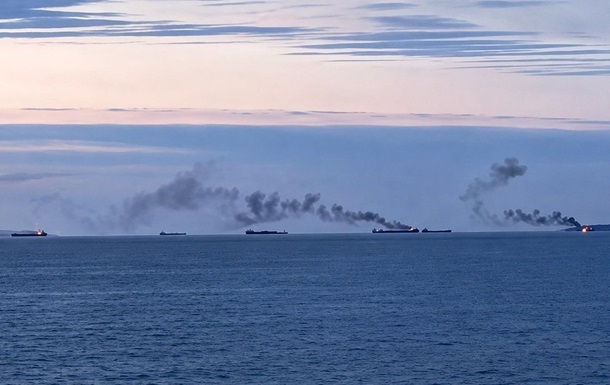
It should be noted that earlier satellite images recorded the targeting of Russian tankers in the Azov Sea, proving successful strikes by Ukrainian drones. This further highlights the risks for the Russian “shadow fleet.”
| Period | Loss Ratio | Tariff Increase |
| First 4 months of 2023 | 2800% | 2-4 times |