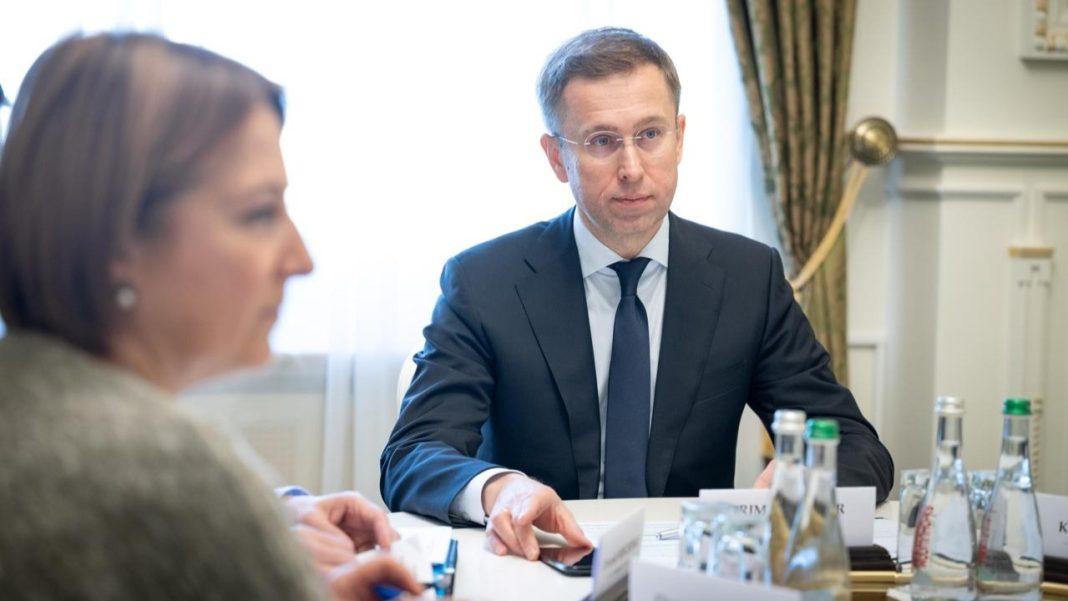

Prime Minister Serhiy Koretskyi stated that Ukraine will not abandon its course toward joining the European Union. According to him, the government supports the fastest possible progress toward the EU and Euro-Atlantic integration.
The head of government made the remarks at the Yalta European Strategy – 2026 (YES) forum.
Statement on the unchanged course
During the discussion, Koretskyi was given the example of Georgia, which had previously moved closer to the EU but now, as the question put it, “once again firmly stands with the other camp.” The prime minister was asked whether Europe understands the risks that Ukraine could also end up in opposition to the European Union, given its own military experience.
In response, Koretskyi said that Ukraine has made good progress in European integration despite the full-scale war and “certain shortcomings of its own.” He compared the current situation with the periods following the Orange Revolution and the Revolution of Dignity, when Ukraine also had opportunities to move closer to the EU.
“I do not even remotely consider a scenario in which we would depart from the European integration path for any reason.
Serhiy Koretskyi, Prime Minister of Ukraine
Government promises to continue practical steps
The head of government described himself as a “full-fledged advocate” of the European integration course and said that the Cabinet of Ministers intends to continue taking practical steps toward Ukraine’s accession to the EU.
“I can say personally that I am a full-fledged advocate of our European integration path. The government is equally committed.
Serhiy Koretskyi, Prime Minister of Ukraine
The prime minister also noted that in his previous positions, he had demonstrated support for Ukraine’s accession to the EU through practical actions. He previously headed Ukrnafta and Ukrtatnafta, and later served as chairman of the board of Naftogaz of Ukraine.
Aligning legislation and enforcing laws
To join the EU, Ukraine must align its national legislation with European standards. Michael Emerson, a senior research fellow at the CEPS think tank, previously noted that the key challenge would not be the number of laws adopted by parliament, but their practical implementation.
Garvan Walshe, a researcher at the Wilfried Martens Centre for European Studies in the United Kingdom, for his part, said that the accession of new states to the EU could become an opportunity for the bloc to change its rules and limit the use of veto powers.